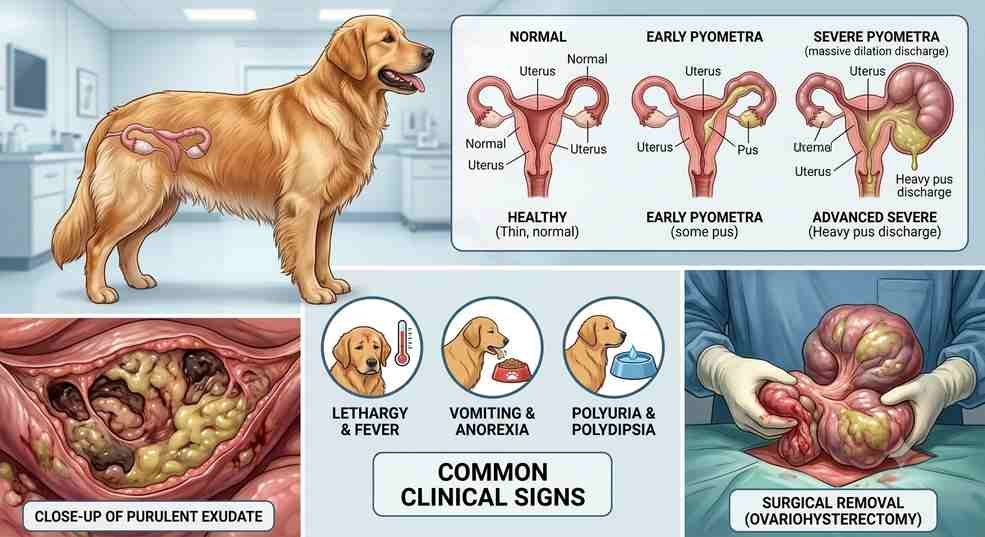


As soon as we realized something was wrong and she was diagnosed with pyometra, we had her spayed. For a few days, she seemed to be recovering well. Then after five to seven days of surgery, she passed away.
Looking back, I wish we had known that spaying her while she was young and healthy could have prevented this disease completely.
I am not writing this to scare anyone. I am writing this to create awareness because I wish someone had told me sooner.
If you have an unspayed female dog, especially one that is middle-aged or older, please keep reading and talk to your veterinarian. Early knowledge really can save lives.
Table of Contents
What Is Pyometra?
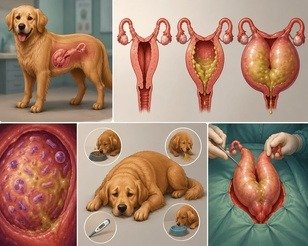
Pyometra, also called canine pyometra, is a serious, life-threatening uterine infection in dogs. It only affects female dogs that have not been spayed.
When your dog goes through a heat cycle (menstruation) and doesn’t get pregnant, her body still thinks that she’s pregnant. So it still produces the hormones that maintain pregnancy. It causes the lining of the uterus to become thicker. Over time, with each heat cycle the lining becomes thicker and thicker. This is called cystic endometrial hyperplasia. It means cysts form within the uterus. So now when your dog has had multiple heat cycles and she doesn’t have any puppies, her uterus is filled with mucus. Bacteria can enter through the cervix, multiply inside the uterus, and cause the infection.
This condition is called pyometra.
Because this infection is driven by reproductive hormones, it is almost entirely preventable through spaying.
Puppies do not develop this uterus infection. So there is nothing like puppy pyometra. The infection usually appears in adult or senior dogs after several heat cycles. The risk increases with age.
The Two Types of Pyometra
Veterinarians classify pyometra into two forms.
Open Pyometra
The cervix stays open, allowing infected fluid to drain from the vagina.
Common signs include:
- Foul-smelling vaginal discharge
- Pus or blood-tinged discharge
- Wetness around the vulva
The visible discharge gives warning to the owners.
Closed Pyometra
The cervix closes completely.
No discharge is visible, so the infection stays trapped inside the uterus. Pressure builds quickly, making this form much more dangerous than open pyometra.
Because there are no obvious signs at first, it is often diagnosed later, when the dog is already critically ill.
Signs and Symptoms of Pyometra in Dogs
Early pyometra symptoms in dogs can be easy to miss.
Here are some:
- Foul-smelling vaginal discharge, usually 2 to 8 weeks after a heat cycle
- Increased thirst
- Frequent urination
- Lethargy or unusual tiredness
- Loss of appetite
- Fever
- Swollen or painful abdomen
- Vomiting in some dogs
- In closed pyometra, severe lethargy and fever with no discharge
If your dog recently finished a heat cycle and develops any of these symptoms, contact your veterinarian immediately.
This can become a life-threatening emergency within hours or days. Early diagnosis greatly improves the chances of survival.
Why Early Spaying Is the Best Prevention
Spaying removes the ovaries and uterus before infection can develop.
It is the only way to completely prevent this infection.
Once the infection develops, emergency surgery is usually the only effective treatment. Antibiotics alone rarely cure the disease.
Many veterinarians recommend spaying around six months of age or before two years old. However, the best timing depends on your dog’s breed, size, and overall health.
Your veterinarian can help you decide the safest time.
Early spaying also reduces the risk of mammary tumors and several other reproductive diseases.
What I Want Other Dog Owners to Know
I want to be honest because I think it matters.
Spaying my dog at nine years old did not fail. By the time she had surgery, the infection had already caused severe damage throughout her body.
The operation removed the uterus but it couldn’t undo all the damage that was already caused throughout the body.
Once it becomes advanced, treatment becomes much more difficult.
That is why prevention is so important.
Spaying a young, healthy dog removes the risk before it ever becomes an emergency.
If your dog has not been spayed, don’t wait for symptoms to make the decision for you. Speak with your veterinarian about the best time based on your dog’s age, breed, and health.
What to Do If You Suspect Pyometra
There are no home remedies for this infection.
If your dog has vaginal discharge, fever, lethargy, abdominal swelling, increased thirst, or any other signs of the other mentioned sign, treat it as a medical emergency.
Call your veterinarian or the nearest emergency animal hospital immediately.
Quick treatment can save your dog’s life.
Final Thoughts
I share this story because I believe this information could have changed the outcome of my dog.
If this article helps even one owner recognize the early signs of pyometra or choose to spay before the disease develops, then sharing my experience was worth it.
Disclaimer: This article is based on personal experience and general veterinary guidance. It is for informational purposes only and should not replace professional veterinary advice. Always consult your veterinarian about the best reproductive health plan for your dog.

Comments are closed.
[…] Severe vomiting […]
[…] is scheduled. Spaying is one of the most common surgical procedures for female dogs to prevent Pyometra. A well-planned dog spay recovery diet helps your pet regain strength and heal safely. Many dogs […]
[…] TNVR controls the population and reduces disease risk (like rabies) through spaying and vaccination all without killing any […]
[…] Such as lack of sleep, stress, flashing lights, sudden temperature changes, hormonal shifts (especially in unspayed females), and missing a dose of medication. Keeping a simple diary, noting the time, what your dog was […]