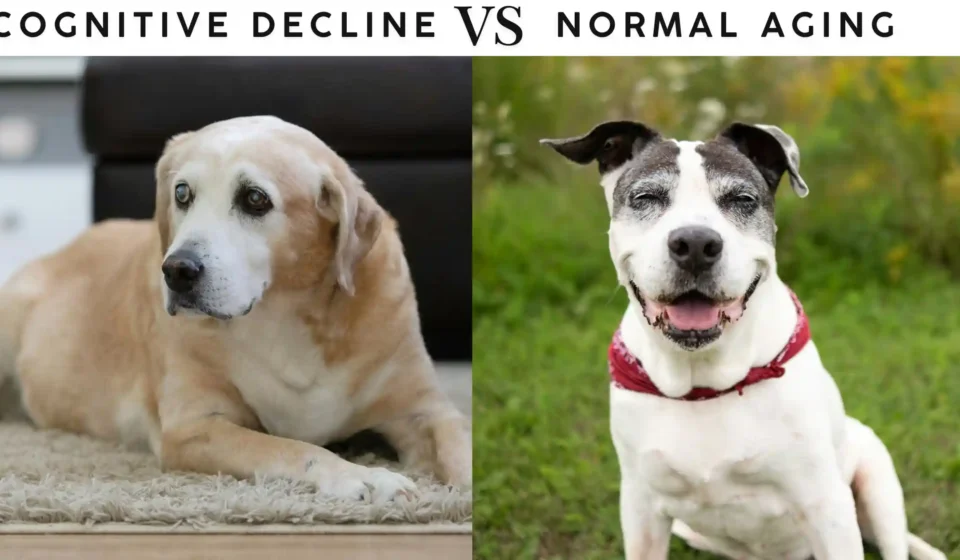

I used to handle marketing for a pet store. One thing came up again and again in conversations with pet parents that’s the confusion between normal aging and cognitive decline in dogs.
Your dog is slower these days. They sleep more, hesitate at the top of the stairs and don’t come running the second you grab the leash. Is that just what happens when a dog gets old or is it the start of something more serious?
What I’m sharing here comes from those conversations with other pet parents, research, and my own dog’s health journey. It’s a genuinely hard question to answer. It is because cognitive decline in dogs often starts by looking exactly like ordinary aging.
Table of Contents
Why It’s So Easy to Confuse the Two
Normal aging and cognitive decline overlap with each other. As both involve a dog slowing down, sleeping differently, and responding a little less sharply than they used to. This is exactly the reason why cognitive decline is assumed as normal aging by many pet parents.
The difference isn’t really about spotting one dramatic symptom. It’s about noticing a pattern like how many changes are showing up together, and whether they’re staying stable or steadily getting worse.
What Normal Aging Actually Looks Like
Before worrying about decline, it is important to understand how normal aging actually looks like for your dog, without anything else going on:
- Slower movement: Especially first thing in the morning or after a long rest, without appearing confused about where they’re going
- More sleep overall: A normal, predictable sleep-wake pattern. Awake and alert during the day, settled at night
- Mild hearing or vision changes: The dog adjusts on their own and doesn’t seem confused by it.
- Less enthusiasm for vigorous play: It happens while still recognizing and engaging with family members normally
- Occasional stiffness: Particularly in cold weather, that eases once they’re moving
- Consistent house training: With maybe the very occasional accident if they’re unwell or held it too long not a new, repeated pattern
The common thread is A dog who is aging normally is slower, but not lost. They still know where they are, who you are, and what’s expected of them.
What Points to Cognitive Decline Instead
Cognitive decline looks much different than normal aging. Instead of a general slowdown, you start to see specific, progressive changes such as confusion in familiar spaces and new nighttime restlessness. House soiling comes out of nowhere after years of reliable training.
Dogs seem to genuinely forget commands and routines they’ve known for years. We’ve covered these signs, along with the four recognized stages of dog dementia, in detail in our dog dementia guide. This article is focused specifically on the “is it aging or is it decline” question itself.
Side-by-Side: Aging vs Decline
| What You Notice | Normal Aging | Possible Cognitive Decline |
|---|---|---|
| Getting around the house | Slower, but knows where they’re going | Gets “stuck” in corners or seems lost in familiar rooms |
| House training | Rare accident if unwell or held it too long | Frequent accidents with no physical cause |
| Sleep pattern | Naps more, but sleeps through the night | Awake and pacing at night, sleepy during the day |
| Response to family | Slightly less playful, still affectionate and aware | Noticeably withdrawn, or newly clingy and anxious |
| Commands and routines | Occasionally slower to respond | Appears to forget cues or routines known for years |
A Quick Self-Check
If you’re not sure which side of the line your dog falls on, ask yourself these questions:
- Is this a single change, or several happening together? One slower morning is aging. Disorientation with night time pacing and house soiling together, is worth a closer look.
- Is it staying the same, or getting worse? Normal aging usually levels off. Cognitive decline usually keeps getting worse over weeks or months.
- Does my dog still seem to “know” what’s going on around them? A dog who’s slow but oriented is aging. A dog who seems confused about familiar people, places, or routines may be experiencing something more.
- Would this change be unusual even for an older dog? Trust your instinct here. You know your dog better than any checklist does.
If your answers point toward “several changes, getting worse, and seeming lost rather than just slow,” it’s time for a vet visit rather than more waiting and watching.
When to See the Vet
Because so many of these symptoms can also come from arthritis pain, vision or hearing loss, thyroid disease, or a urinary tract infection, a proper veterinary workup matters before assuming it’s cognitive decline.
Vets often use structured questionnaires to help sort out normal aging from true decline, alongside blood work and a physical exam to rule out other causes. Our dog dementia guide walks through what that diagnostic process, along with treatment options, actually looks like.
Frequently Asked Questions
Is some cognitive decline inevitable in senior dogs? Not necessarily to the point of dementia. But very mild cognitive changes are a normal part of aging for most dogs. It is similar to how people can get a little forgetful with age without it being Alzheimer’s.
At what age should I start watching for cognitive decline? Signs typically become more noticeable from around 10-11 years onward. It can also begin earlier in some dogs. It’s worth mentioning any behavior changes to your vet regardless of exact age.
Can normal aging turn into cognitive decline over time? They’re not exactly a spectrum in that sense. A dog can age completely normally their whole life without ever developing cognitive decline. But because both involve a slowdown, it’s worth continuing to watch for the more specific pattern-based signs as your dog gets older.
My dog has one or two of the “decline” signs but seems otherwise fine, should I worry? A single, mild sign in isolation is far more likely to be normal aging or something else entirely (like early arthritis) than cognitive decline. It’s the combination and progression that matters most, not any one symptom alone.
Is it normal for an old dog to sleep most of the day? More sleep overall is normal. What’s not typical is a reversal of the sleep-wake cycle sleeping through the day and staying awake, restless, or vocal at night.
This article is for informational purposes only and is not a substitute for veterinary care. If you’re concerned about sudden or severe behavior changes in your dog, contact your veterinarian.
For ongoing large-scale research into canine aging and cognition, see the Dog Aging Project, a research initiative led by Texas A&M University and the University of Washington.



Comments are closed.
[…] make dogs tired easily. They prefer to sleep more, rest more and less interested in walks or play. Owners confuse this as aging but it’s because their body is in pain to be active. It is actually a joint pain and not a […]