

Dog dementia, also known as canine dementia, canine cognitive dysfunction (CCD), or canine cognitive disorder, is a real and surprisingly common condition in aging dogs. It doesn’t usually start with pain. It starts with small changes.
It’s often compared to Alzheimer’s disease in humans. This is why people usually search for dog Alzheimer.
The good news is that once you understand what’s happening, there’s a lot we can do to provide comfort to our dogs. This guide helps learn about what canine dementia is, early signs and different stages of it.
Table of Contents
What Is Dog Dementia?
Canine cognitive dysfunction is a progressive brain condition that affects a dog’s memory, learning, awareness, and behavior as they age. Vets sometimes call dog dementia by different names, but they all mean the same thing. “Canine senility” and “senile dog dementia” are just older, more casual ways of saying it.
It develops gradually, so many owners miss the early signs. The early signs can look a lot like “normal” aging. Dogs can tell us that they are confused. But they will start behaving a little differently than usual.
Dog Dementia Signs to Watch For
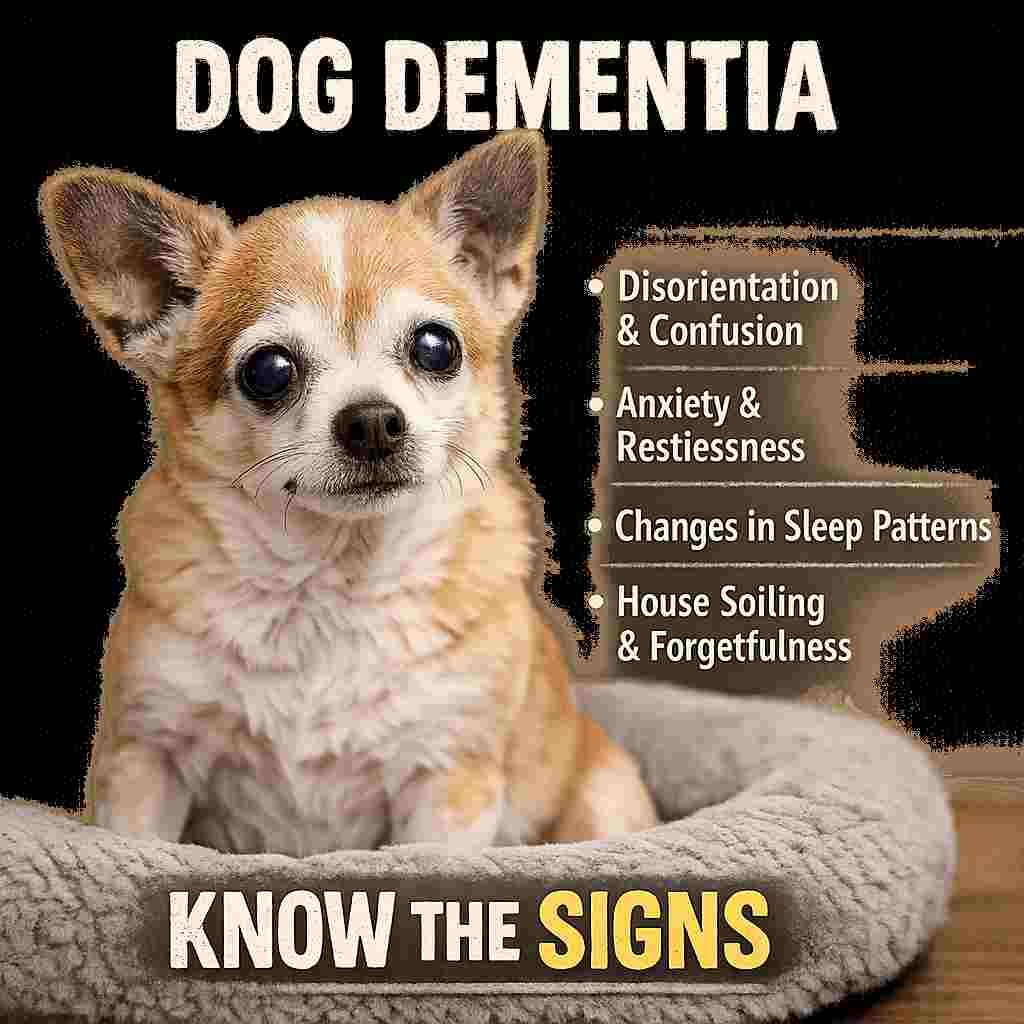
Recognizing the signs of dog dementia early is important. As it can make a difference in how we treat this condition. Common signs include:
Disorientation: Getting “stuck” in corners, staring at walls, or seeming lost in familiar spaces like your own living room
Changes in sleep patterns: Sleeping more during the day and becoming restless or awake at night
House soiling: Starts having accidents inside the house, even though they were fully trained for years and never used to do that.
Reduced interaction: Less interest in play, greetings, or affection
Increased anxiety or clinginess: New fearfulness, whining, or following you from room to room
Repetitive behaviors: pacing in circles, licking, or barking at nothing in particular
Forgetting known commands or routines: not responding to cues they’ve known for years
These above signs could also be due to pain, vision, hearing loss, or other medical conditions, not just of CCD or dog dementia. That’s why any of these changes are worth a vet visit rather than a guess at home.
Sundowning: The Nighttime Side of Canine Dementia
This is when a dog’s confusion, restlessness, pacing, or vocalizing gets noticeably worse in the late afternoon and evening, mirroring a pattern seen in human dementia patients. It is a part of dog dementia.
Canine sundowners can look like:
- Increased pacing or restlessness starting around evening
- Whining, barking, or howling in the evening for no clear reason
- Trouble settling down to sleep at night
- Increased anxiety as daylight fades
If you want to learn more on sundown syndrome, check out the other blogs which has covered concept and signs of Canine sundowners.
The Stages of Dog Dementia
Like human dementia, canine cognitive dysfunction or dog dementia progress gradually through recognizable stages. Knowing where your dog falls can help you and your vet decide on the right level of support.
Stage 1: Mild Cognitive Decline
This early stage is subtle and easy to miss. You might notice:
- Occasional confusion in familiar settings
- Slightly slower response to commands
- Mild changes in sleep patterns
- Brief moments of “spacing out”
At this stage, many owners chalk it up to normal aging rather than the start of CCD, which is exactly why it’s worth mentioning even minor changes to your vet.
Stage 2: Moderate Cognitive Decline
Symptoms become more noticeable and frequent:
- More regular disorientation, even in the home
- Increased house soiling accidents
- Reduced interest in play or affection
- Early signs of sundowning (restlessness or anxiety in the evening)
- Occasional forgetting of well-known commands
Stage 3: Severe Cognitive Decline
At this stage, symptoms are consistent and harder to manage:
- Frequent, prolonged disorientation and getting “stuck” in corners or under furniture
- Significant sleep disruption, often with nighttime pacing or vocalizing
- Little to no recognition of familiar commands
- Noticeably reduced interaction with family members
- Pronounced anxiety, especially around evening
Stage 4: Advanced/End-Stage Dementia
In the final stage, quality of life becomes the central concern:
- Near-constant confusion, even in familiar spaces
- Severe sleep-wake disruption
- Little responsiveness to people or surroundings
- Loss of most learned behaviors
- Difficulty with basic routines like eating or walking normally
Its time for owners to sit and consult with their vet about their dogs’ well-being and over all quality. Together, they can decide what’s truly best for the dog’s quality of life going forward.
Every dog is different. Some stay at the initial stage for a long time without getting worse while others decline faster. This is why regular vet visits are helpful (usually once every 6 months). It helps you track your dogs health while adjusting treatment as needed.
When to Talk to Your Vet
Because so many of these symptoms overlap with other treatable conditions like arthritis pain, vision loss, thyroid issues, or urinary tract infections, a proper veterinary workup is essential before assuming it’s dementia. Vets often use structured questionnaires to help distinguish normal aging from true cognitive decline. It is a big part of how research on dogs and dementia has advanced in recent years.
The earlier CCD is identified, the more effective the treatment will be. So if your dog’s behavior has shifted in ways that feel “not quite them,” it’s worth bringing up sooner rather than later.
The Bottom Line
Watching a dog go through cognitive decline is hard, especially when they’ve been a steady, familiar presence for years. But canine dementia doesn’t have to mean giving up on their comfort or quality of life. Between medication like selegiline, diet changes, environmental adjustments, and a little extra patience, many dogs with CCD can still enjoy their senior years just with a bit more support from the people who love them.
If you’re noticing any of the signs above, especially sundowning behavior in the evenings, talk to your vet about a cognitive assessment. Catching it early gives you and your dog the best shot at managing it well.