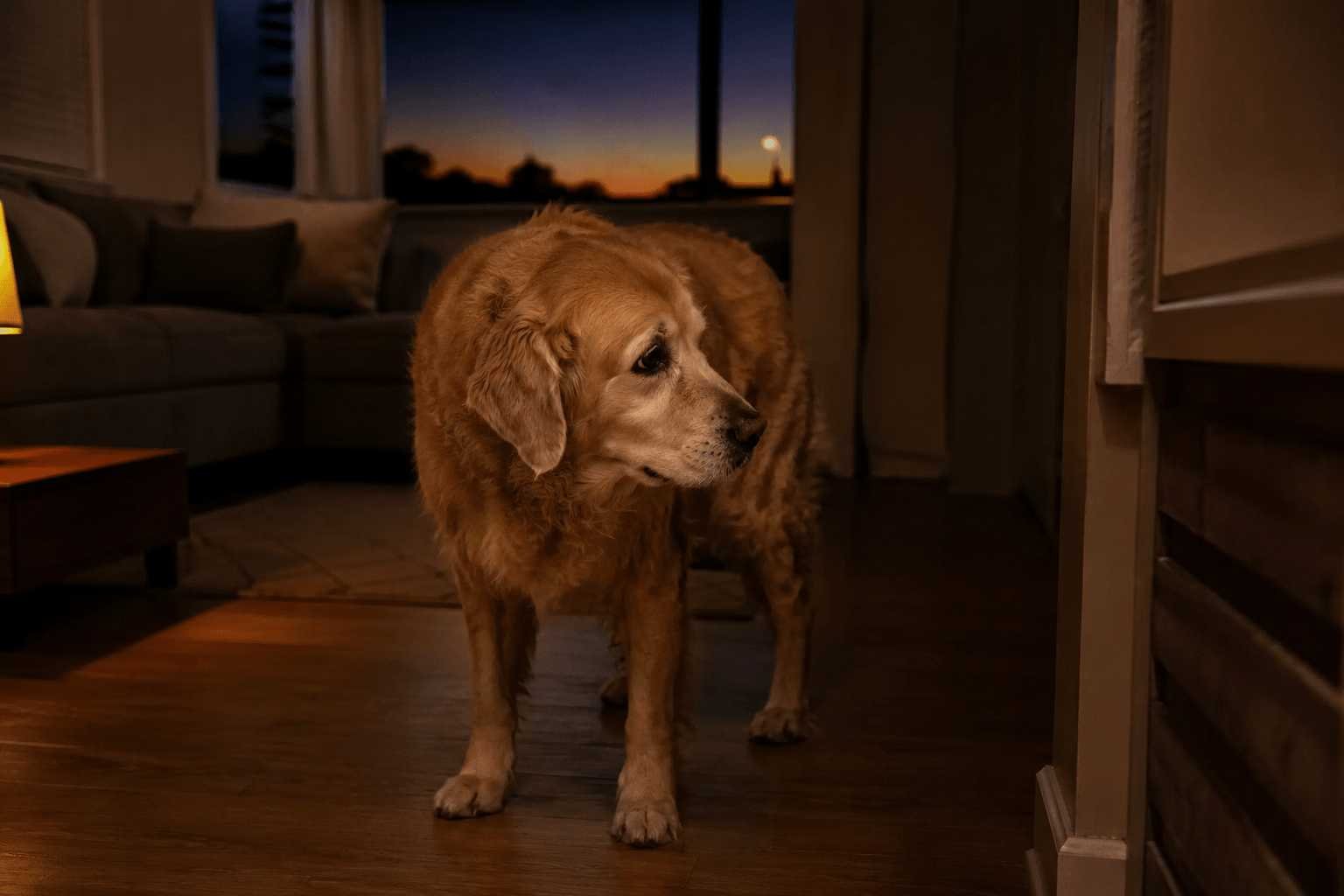

Does your senior dog seem calm all day, then suddenly becomes restless, anxious, or confused in the evening? That pattern is very common in senior dogs, and it is called canine sundown syndrome.
In our last post, we covered what this condition is and why it happens. Here are the six dog sundowners symptoms most owners notice first, plus when it’s time to call the vet.
Table of Contents
Dog Sundowners Symptoms: How Canine Sundown Syndrome Shows Up
1. More Whining, Barking, or Howling at Night
One of the first signs is that your dog barks, whines, or howls more than normal, and it gets worse as the evening goes on.
This kind of barking or whining isn’t your dog trying to tell you something specific (like “I’m hungry” or “let’s go outside”). It often seems random, like they’re barking or whining at nothing at all.
If your dog never used to do this and now does it nightly, it’s worth paying attention to.
2. Restlessness and Trouble Settling Down
Dogs with sundowners often can’t relax once evening hits.
They may pace from room to room and shift positions over and over. They seem unable to get comfortable no matter what you try.
A dog that used to sleep soundly right after dinner suddenly seems wired or uncomfortable instead.
3. Getting Confused in Familiar Places
Watch for a dog that seems lost in rooms they’ve known for years. This can look like:
- Staring blankly at walls or corners
- Standing at the wrong side of a door or waiting
- Getting stuck behind furniture
- Wandering with no clear destination
These moments are often short, but they tend to show up more often after sunset.
4. A Flipped Sleep Schedule
A dog with sundowners often naps heavily during the day, then becomes alert and unsettled at night.
If your dog’s routine feels reversed compared to a few months ago, this is one of the clearest dog sundowners symptoms to watch for.
5. Clinginess or Anxiety as Evening Approaches
Some dogs become noticeably more attached to their owner right before dark. This can look like:
- Following you from room to room
- Panting or trembling without an obvious cause
- Seeming unsettled unless someone is nearby
This kind of anxiety usually builds slowly over weeks, not overnight.
6. Momentary Confusion Around People or Pets
In some cases, dogs seem briefly unsure of familiar faces, especially in dim lighting.
This can be startling to see, but it’s a recognized part of canine cognitive dysfunction. It doesn’t mean your dog has forgotten you.
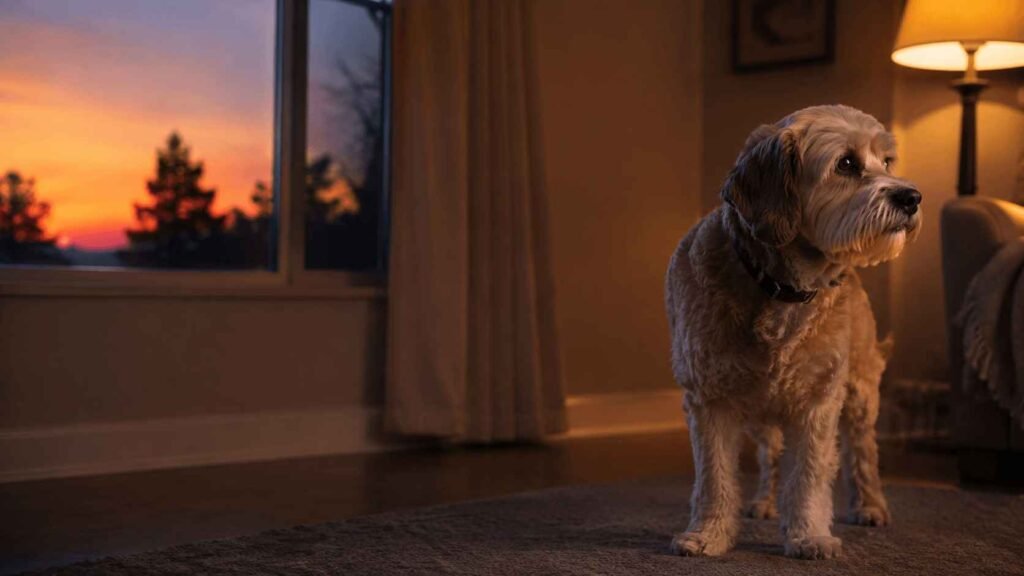
When It Might Be Something Else
Not every nighttime symptom points to cognitive decline. Vets always rule out these first:
- Arthritis or pain, which can cause night-time restlessness
- Urinary tract infections, which may lead to pacing or accidents
- Vision or hearing loss, which can look like disorientation and is very common in older dogs
- Other medical issues that affect sleep and behavior
This is exactly why any new or worsening symptom should start with a vet visit rather than a guess.
Tracking What You See
Before your vet visit, note down a few quick notes like:
- What time the behavior usually starts
- How long it tends to last
- Whether anything specific seems to set it off
- Whether it’s getting better, worse, or staying about the same
This kind of simple tracking gives your vet real information to work with, instead of a vague “he’s been uncomfortable at night lately.”
Vet Supervision Is Important
Never try to diagnose or manage this on your own. Confusion and restlessness can have several causes, and only a vet can tell you which one fits your dog.
Always check with your vet before starting any new supplement, medication, or routine change, even if it’s something you read about online.
The Bottom Line
Canine sundown syndrome can look a little different from one dog to the next, but the evening timing is usually the clearest clue. If you’re noticing a consistent pattern of confusion, restlessness, or anxiety once the sun goes down, it’s worth bringing up at your next vet visit.
Catching these dog sundowners symptoms early often means more options for helping your dog feel calmer, both day and night. If you missed it, check out our first post on what canine sundown syndrome is and why it happens for the full picture. You can also follows many ways to calm your dog.



Comments are closed.
[…] If you want to learn more on sundown syndrome, check out the other blogs which has covered concept and signs of Canine sundowners. […]