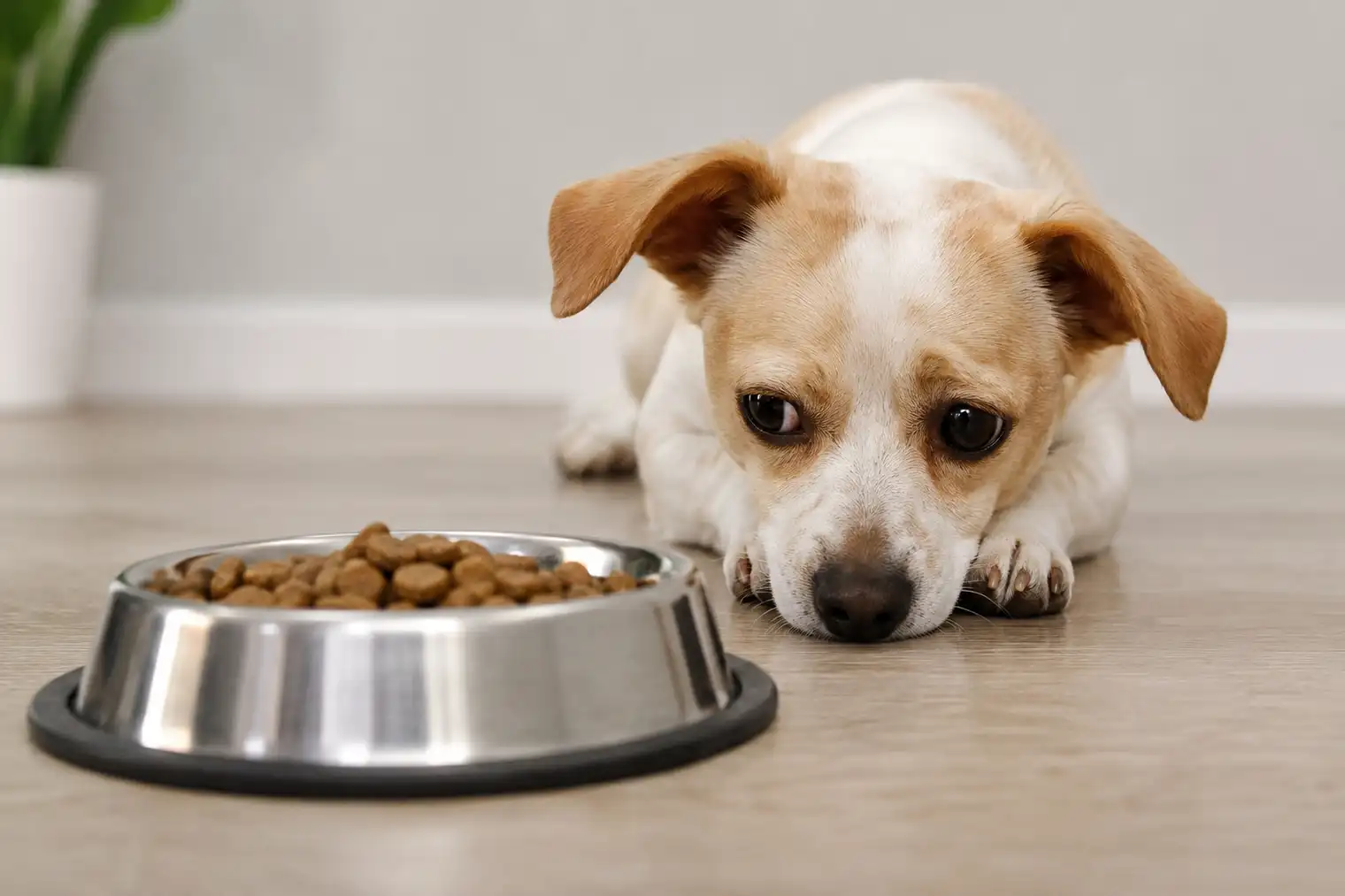

Why is my dog not eating? I have asked myself that question more than once. My own dog went through phases where she just wouldn’t eat her food. Sometimes it was because of her stomach, sometimes her teeth, and sometimes just being away from home.
It’s scary at first, but most of the time there’s a simple reason behind it. (Senior dogs can also lose interest in their food as apart of cognitive decline). You can see our guide on dog dementia signs and stages if your dog is a senior. Here are the most common causes, including a few I learned from my experience.
Table of Contents
1. Why Is My Dog Not Eating? An Upset Stomach Is Often the Reason
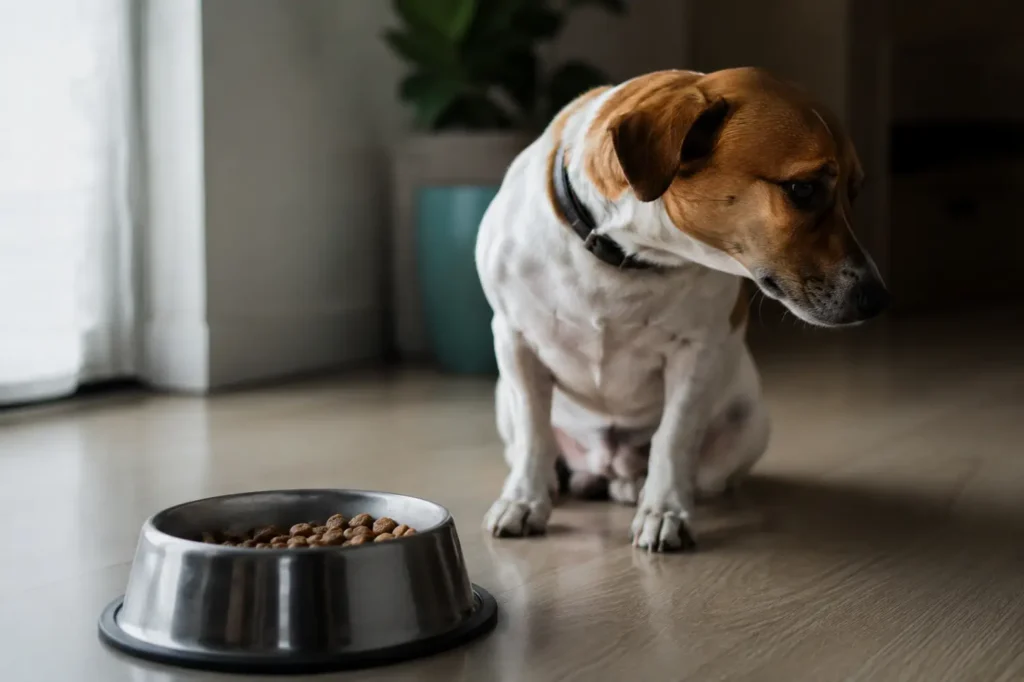
This was one of the most common reasons my dog skipped meals. If her stomach was upset from eating something she shouldn’t have. Sometimes she would also turn down food completely for an entire day.
What helped: I’d give her stomach a little break, then offer something bland like boiled chicken and rice in small amounts. She usually bounced back within a day or two. During upset stomach she used to eat grass to soothe her stomach. If it goes on longer than that, it’s worth calling the vet.
2. Dental Pain
My dog also went through a phase with dental issues. It was because of the lack of dental care. I noticed she’d walk up to her bowl, sniff it, and just walk away. She’d eat a little and then stop like it hurt.
If you’re asking why is my dog not eating even though the food hasn’t changed, sore teeth or gums could also be a reason. It can make eating physically uncomfortable even when a dog still seems interested in food.
What to look for: Bad breath, drooling, chewing only on one side, or dropping food while eating. A vet check and teeth cleaning can make a big difference.
3. Being Away From Home (Travel or Vacation)
This one surprised me at first. Whenever we took her on a trip, or even just a short day outing, she’d refuse to eat. If your dog is not eating only when you’re away from home, travel stress is very common among dogs.
New places, new smells, and being out of her routine were enough to shut off her appetite.
What helped: Bringing her regular food and bowl from home, keeping mealtimes as close to her normal schedule as possible, and not worrying too much if she skipped a meal or two during travel. She always ate again once we were back home.
4. Eating Normally in Every Other Way, Just Not Food
Sometimes a dog will skip meals but still act totally normal, playful, alert, and drinking water fine. This usually isn’t a big deal. It might just be pickiness.
A big treat earlier in the day, or a mild stomach upset could be its main reason. This is actually one of the more common versions of why is my dog not eating that owners ask about, since it’s confusing when nothing else seems wrong.
What to do: Give it about a day. If she’s still acting like herself, there’s usually nothing to worry about yet.
5. Not Drinking Water Either
This is the one that should get your attention faster. If your dog isn’t eating and isn’t drinking water. This is different from just skipping a meal. It can be a sign of nausea, fever, or something that needs a vet visit sooner rather than later.
What to do: Try to encourage water even a splash of plain broth in the bowl can help. If she still won’t drink after a day, call your vet.
6. Eating Something They Shouldn’t Have
Sometimes your dog stops eating because their stomach is reacting to something bad. Dogs can’t eat everything that humans can. Two common ones to know about:
- Chocolate: Dogs can’t process it the way we can, and it can cause nausea and appetite loss, even in small amounts.
- Onions (and garlic): These can hurt a dog’s red blood cells and often cause tiredness and appetite loss too, even from small bits of table scraps.
What to do: If you think your dog got into chocolate, onions, or anything else they shouldn’t eat then call your vet right away. Don’t wait to see if symptoms show up first.
7. Recovering From Illness, Surgery, or a Vaccine
A smaller appetite for a day or two after a vaccine, surgery, or being sick is pretty normal. The body is busy healing. If you’re dealing with this after a specific illness, our guide on helping a dog recover after parvo covers appetite changes during recovery in more detail.
What to do: Offer small amounts of bland, easy food, and follow whatever your vet recommended. If she’s still not eating after the expected recovery time, check in with the vet.
When Is My Dog Not Eating a Real Emergency?
Skipping one meal usually isn’t an emergency, but call your vet if:
- It’s been more than a day or two with no eating
- She’s not eating and not drinking
- There’s vomiting, diarrhea, or she seems in pain
- You know or suspect she got into chocolate, onions, or something toxic
- She seems tired or “off” along with not eating
If you want a vet-reviewed breakdown of appetite loss as a symptom, the American Kennel Club’s guide on when to worry about a dog not eating is a solid outside resource worth checking too.
The Bottom Line
Every dog is a little different, but in my experience, when I asked myself why is my dog not eating, it usually came down to one of a few things her stomach, her teeth, or just being somewhere unfamiliar. Once I learned her patterns, it got a lot less scary. If your dog skips a meal, watch how she’s acting overall, and don’t be afraid to call your vet if something feels off.


Comments are closed.
[…] (If your dog’s appetite has been off in general rather than this being a sudden episode, that’s a different issue — see our guide on why your dog isn’t eating.) […]
[…] Differences July 13, 2026 Dog Seizures: 8 Alarming Causes, Warning Signs & What to Do July 12, 2026 Why Is My Dog Not Eating? 7 Dangerous Causes to Know July 11, 2026 Parvo Recovery: 7 Vital Steps to Save Your Dog July 8, 2026 Dog Dementia: 7 […]
[…] remained untouched. If your dog is also refusing meals beyond just being left alone, our guide on why dogs stop eating covers the other causes to rule […]