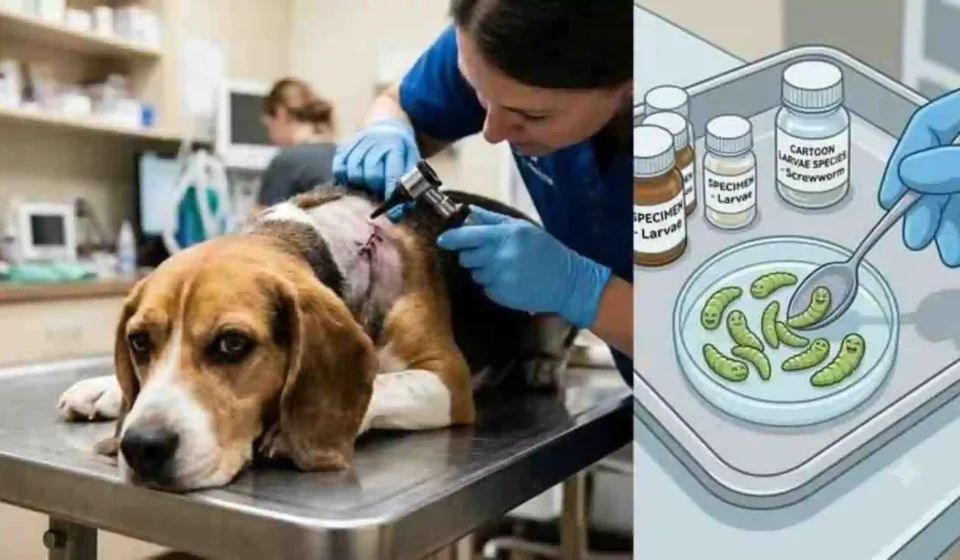

New World screwworm (NWS) is a parasitic fly whose larvae stay into a dog’s living flesh through an open wound. It disappeared from the US in the 1960s. But in June 2026 it returned with confirmed cases in Texas and New Mexico. A pet owner should watch for a wound that smells bad, won’t heal, or has visible maggots. Call your vet right away if you see any of these signs.
Table of Contents
What Is Screwworm?
Screwworm is not a worm. It’s the larval (maggot) stage of a fly called Cochliomyia hominivorax.
Most flies lay eggs in dead or rotting tissue. Screwworm flies are different. They lay eggs in living tissue usually inside an open wound. Once the eggs hatch, the larvae digs deeper into the flesh using small hook-shaped mouths. This causes real damage, and it happens fast.
A female screwworm fly can lay 200 to 400 eggs at once. Eggs hatch within about 24 hours.
Is Screwworm in Dogs a New Problem?
Yes, for the US at least. Screwworm was declared to have vanished from the United States back in the 1960s. It stayed away for roughly 60 years.
That changed on June 3, 2026, when USDA officials confirmed an active case in Zavala County, Texas. Days later, on June 8, 2026, the first confirmed dog case was reported in Lea County, New Mexico. That dog survived after getting veterinary treatment.
Since then, cases have continued to appear across parts of Texas and New Mexico. Health officials are watching closely for any spread beyond these areas.
Where Is the Risk Highest for Dogs?
Right now, the risk is concentrated in southwest Texas and New Mexico, close to the outbreak zone. If you live in or are traveling through these areas, you should be extra cautious.
For most dogs living elsewhere in the country, the current risk is low. But because this is a developing situation, it’s smart to stay updated through your vet or official sources. Especially if you plan to travel with your dog.
Warning Signs/Symptoms of Screwworm in Dogs
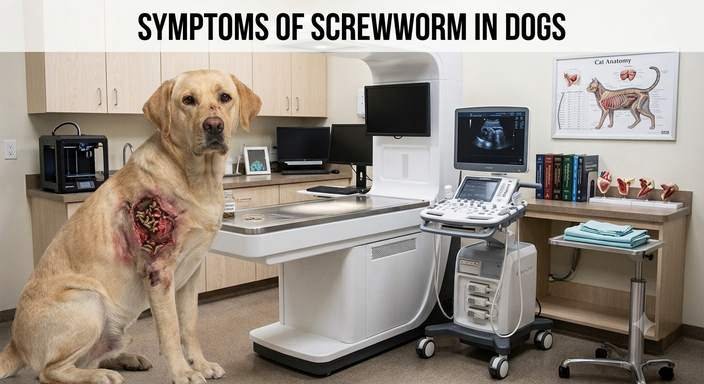
Call your vet immediately if you notice any of the following:
- A wound that smells bad
- A wound that keeps getting bigger instead of healing
- Visible maggots moving in or around a wound, or near the nose, ears, eyes, or mouth
- Unexplained pain, restlessness, or behavior changes
- Fever, low energy, or loss of appetite
Even a small wound can attract screwworm flies. A small wound from rough play, a tick bite, or a fresh surgical site can all be enough. The smell of an open wound is what draws the female fly in.
How Do Dogs Get Infected?
A dog gets infected when a female screwworm fly lays eggs on an open wound or in a moist body opening such as the nose, ears, eyes, or genitals. This is more likely to happen if your dog:
- Spends a lot of time outdoors, especially near southwest Texas and New Mexico
- Has any open wound, cut, or scrape
- Has recently had surgery or an untreated injury
- Sleeps outside or is unable to move away from flies easily
What Happens If a Dog Is Infected?
Once larvae hatch inside a wound, they feed on living tissue. They also dig deeper as they grow. This causes the wound to enlarge rather than heal. It becomes increasingly painful for your dog.
If it is left untreated, it can cause severe tissue damage and secondary bacterial infection. In several cases it can also lead to death.
This is why acting fast matters. The sooner a vet can remove the larvae and treat the wound, the better the outcome becomes.
What to Do If You Suspect Screwworm
- Don’t wait. Call your veterinarian the same day you notice a wound that looks unusual.
- Avoid touching or treating the wound yourself. Let a vet examine it properly.
- Mention your dog’s recent travel or outdoor activity, especially any time spent in or near Texas or New Mexico.
- Follow your vet’s guidance. Treatment usually involves removing the larvae, cleaning the wound, and antibiotics if there’s an infection.
Vets may also need to report confirmed cases to animal health authorities like USDA APHIS. Since screwworm is a reportable disease that affects livestock and food supply as well as pets.
How to Protect Your Dog
- Check your dog’s skin regularly for cuts, scrapes, or wounds, especially after outdoor time.
- Clean and cover any wound as soon as you spot it.
- Avoid unnecessary travel with your dog to or through known outbreak areas.
- Keep up with flea and tick prevention, since tick bites can also become entry points.
- If you must travel with your dog through an affected region then check current health and movement requirements first. Since some states have added rules for interstate pet travel.
Frequently Asked Questions
- Is screwworm dangerous to humans too? Yes. Screwworm can affect any warm-blooded animal, including people, though human cases are rare. Anyone with an open wound in an outbreak area should take the same precautions as for pets.
- Can a dog fully recover from screwworm? Yes, with prompt treatment. Recovery depends on how early the infection is caught and how large the wound is. The first confirmed dog case in New Mexico survived after receiving veterinary care.
- Is my dog at risk if I don’t live near Texas or New Mexico? Current risk outside the outbreak zone is low. Still, it’s worth staying informed, especially if you travel with your dog to affected states.
- How is screwworm different from regular maggots in a wound? Regular fly maggots usually feed on dead tissue and are less harmful. Screwworm larvae feed on living tissue, causing wounds to grow larger and more painful instead of healing.
This article is for general information only and isn’t a substitute for veterinary advice. If you suspect your dog has a screwworm infection, contact your veterinarian immediately.