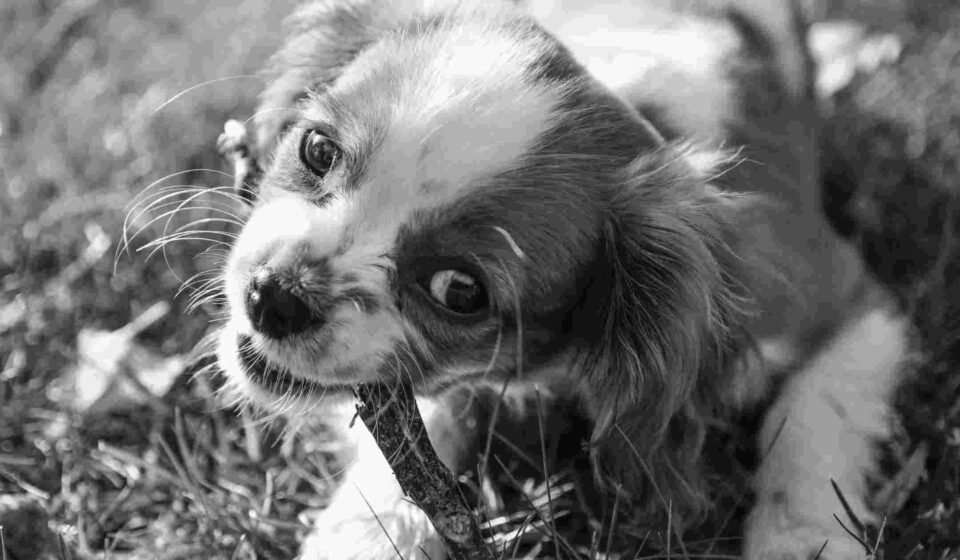

I have always had dogs growing up. But when I was 12 years old, we got a puppy. I was very happy and excited about her. I named her Jessy. We got her when she was about a month and a half old. She was so tiny that she would literally fit in my single hand. I thought the hardest part of owning the puppy would be potty training.
I was completely wrong. It was biting. She would bite my hands, legs, shoes, clothes, and everything in her sight. If your puppy won’t stop biting, don’t worry. It’s actually normal and nothing much to worry about. This guide will help you understand what is going on and what can be done to help it.
Table of Contents
Why does puppy won’t stop biting?
Puppies bite not because they want to harm us. They do so to grab our attention and to relieve teething pain. Here are the common reasons why a puppy won’t stop biting.
Teething
It is one of the most common reasons for puppy biting. When your puppy reaches 3-4 months old, their baby teeth fall off, and their adult teeth start to show. It creates pain in their gums, and chewing on you, your clothes, or shoes relieves the pain.
My Jessy would bite me, our family members, and slippers. We also got her a teething toy so she could divert her biting from us to the toy. It worked fairly well, as she preferred slippers over the toy.
Attention
Sometimes the real problem is not the puppies but the humans. When a puppy bites you, you throw your hands, make noise, or start running from here to there. Your puppy thinks this is the only way to get their attention. So they continue this behavior whenever they want to play or grab your attention.
My Jessy would bite my sister more than other family members. Later, when we talked to the vet, we realized it was because of her loud reaction. She would shout, run away, and make funny noises whenever Jessy would bite her. This reaction encouraged Jessy’s biting habit.
Over-tired or over-aroused (Excessive excitement, stress, or nervous system activation)
When dogs are overly excited, stressed, or tired, chewing, licking, or biting helps cool them down. This is why dogs with separation anxiety can also be seen biting or chewing on things.
If your puppy only bites when the house is empty, it could be separation anxiety. They do it to pass the time and release anxiety, pain, and discomfort. My Jessy also had separation anxiety and would destroy stuff when left alone. It’s a normal behavior shown by dogs.
Play instinct
Puppies are full of energy. They release it by playing, running, and destroying things. If you play with your puppy every time they insist, then you are building this behavior.
There are so many puppies who can’t cool themselves down. My Jessy would also want to play all the time. The thing is, she would only want to play with my sister or me. It used to get so tiring and irritating. I would scold her and act like I was going to hit her. I used to do this to make her stop.
If your puppy won’t stop biting you or your things, it’s just your puppy doing what it does. There is nothing to worry about, and your puppy isn’t broken.
Is it normal or a problem?
If you have a puppy around 3-4 months, then biting and nipping is completely normal. Your puppy will get better with age. You need to pay attention if your puppy won’t stop biting along with these paired signs:
- If they growl or attack you when you reach for their food, toys, or anything they are biting.
- If biting comes from fear. Look to see if their tail is tucked, ears down, and trying to escape rather than excitement.
- If your puppy won’t stop biting even if they have grown up.
- If your puppy only bites stuff when left alone.
- The puppy bites harder every time you try to remove your hand or toy.
If you notice these signs, it is time to have a one-on-one conversation with your vet. Don’t wait for this behavior to become a habit. The more you wait, the more difficult it will be for you and your pet. So seeking professional guidance is a must.
Why does my puppy won’t stop biting only me?
My Jessy would also only bite my sister. She would chase my sister and irritate her to get a reaction out. Here is why your puppy won’t stop biting only you:
- They like to play with you. As you always give them attention.
- They like the smell of your hands or the clothes you are wearing
- They think you are fast, and they can easily get a reaction out of you.
- They like the weird sound you make when they bite you.
- They feel you are an easy target.
- They feel your movement and reaction are loud and exciting.
What to do to stop puppy from biting?
If you are looking for techniques to stop your puppy from biting, here are the techniques that I followed. Some were recommended to me by the vet himself, and some I researched and found. All these techniques work well if your puppy won’t stop biting on things.
Redirecting
You have to do this in the initial stage of biting. Whenever your puppy wants to bite you, your slippers, or any personal things, then redirect them to their toy. So whenever their teeth itch, or they have the urge to bite on things, they will automatically go for their toys.
But you need to teach them at the very beginning of their teething phase. If they build the habit of biting anything, then redirecting is not going to work. They will think of it as a game. You are accidentally making it fun for them.
Be boring
This is simple but so effective. You shouldn’t react strongly to your puppy’s bites. It’s better to ignore them. Many times puppies bite because they want our attention. When they realize biting actually gets our attention, they do it more often. For example: when a puppy bites us, we make noise, we move our hands, and say no, no. This reinforces the puppy for the behavior.
When Jessy would come to bite me, I would simply move my leg without saying a single word. If the biting continued, I would just walk off and mind my own business.
Play around with the toys
Just like humans, puppies can also get bored or tired of the same toy. So, keep rotating their toys and add new textures and smells. If you have 10 teething toys or just 10 toys, lay 5 toys aside at first. When your puppy is done playing with them, change those 5 toys with the remaining toys.
Jessy had about 7 toys that she absolutely loved. We would also give her the toys in rotation. But as she grew older, she stopped playing with her toys.
Feed your puppy’s needs
Puppies are like children. They want to play and spend time with you. Create a fixed routine for them. Set aside one or two hours a day to play with your puppy. This allows them to have fun with you while also creating a fixed pattern. So, the next time, your puppy will wait for the exact time to play rather than randomly bite you.
We also created a fixed routine for Jessy. This helped a lot, as she wouldn’t randomly start biting on things. We would take her out for walks, play in the backyard, and just pet her.
Preventing overstimulation or tiredness
You need to let your puppy rest and have plenty of nap time. Puppies are literal babies. You need to understand when your puppy gets tired. Some puppies need short but frequent naps, while some need longer naps.
This is also one reason why the puppy won’t stop biting. You need to monitor your puppy’s day-to-day activity. We noticed Jessy would get tired very easily. Once she was tired, she would go crazy. So we decided to reduce her play time while focusing on frequent naps.
These are the proven ways to stop your puppies from biting. I want to share a simple routine that was prepared for us by our vet to control the biting. So, if your puppy won’t stop biting, you can follow this routine.
A simple routine that works
- Always keep toys at arm distance. So, you can easily reach the toys when they start to bite you.
- Always keep toys in a place that your puppy can reach.
- Set aside 2-3 hours a day to play with your puppy.
- Let them rest and have plenty of nap time.
- If biting continues after the redirect, stand up and remove your attention for 15-20 seconds.
It is not something you can fix in one day. You need patience and consistency. We followed this to improve Jessy’s behavior. If your puppy won’t stop biting then by following this routine and techniques, you can see real improvements in about a month or two.
Final Thoughts
If your puppy won’t stop biting, know that it is exhausting. But it is very common and not something to worry about. As dogs can’t speak like us, they use their mouths to communicate. They bite you to grab your attention, when they are bored, or when overstimulated.
If you notice biting along with growling, attacking and fear then it is something to consult with your vet. With consistent redirection, enough sleep, and proper routine, your puppy will get better. For additional guidance on bite inhibition training, the American Kennel Club offers a helpful step-by-step resource.